http://news.yahoo.com/s/ap/20060705/ap_on_he_me/bird_flu_nigeria
Not good news. If this is spreading quickly and changing, it has even more opportunity to mutate into pandemic
Wednesday, July 05, 2006


Sunday, July 02, 2006
More bird flu cases coming
WHO predicts that there will be more virus activity in the colder months and that means more opportunity for mutation. I have sort of mellowed in my fears because so far there was just that one mutation that could not start pandemic. Also, I have prepared pretty much all I can prepare. But this raises my anxiety level a tad again.
http://www.abc.net.au/news/newsitems/200607/s1676278.htm
http://www.abc.net.au/news/newsitems/200607/s1676278.htm
Saturday, June 24, 2006
Friday, June 23, 2006
Progress in vacine development
http://today.reuters.com/News/CrisesArticle.aspx?storyId=L2295663
I hope this is as good as it reads.
I hope this is as good as it reads.
It did mutate but not enough for pandemic
http://news.yahoo.com/s/ap/20060623/ap_on_he_me/bird_flu
It was a close call, however, and I sure wish that Indonesia gets its act together soon.
It was a close call, however, and I sure wish that Indonesia gets its act together soon.
Wednesday, June 21, 2006
Indonesia still a hot spot
Indonesia needs help if they will have any chance of controling the flu from spreading among birds.
http://news.yahoo.com/s/ap/20060621/ap_on_he_me/indonesia_bird_flu
http://news.yahoo.com/s/ap/20060621/ap_on_he_me/indonesia_bird_flu
Wednesday, June 14, 2006
Emergency Rooms
A little investment in this problem would do us more good than war.
http://abcnews.go.com/Health/wireStory?id=2075299
http://abcnews.go.com/Health/wireStory?id=2075299
Some vaccine progress
Hope this does help humans, but at least the ferrets are safe now and it is good news to see labs working on the possibilities:
http://abcnews.go.com/Technology/wireStory?id=2076284
http://abcnews.go.com/Technology/wireStory?id=2076284
Monday, June 12, 2006
Wednesday, June 07, 2006
More quotes from Mike Levitt
http://abcnews.go.com/Health/story?id=2045194&page=1
"We could have four to five hurricanes during a pandemic, a bio-terror incident, natural disasters — all during a pandemic. We need to preserve our capacity to respond" by keeping the military and other first-responders healthy and able to work, Leavitt said.
"We could have four to five hurricanes during a pandemic, a bio-terror incident, natural disasters — all during a pandemic. We need to preserve our capacity to respond" by keeping the military and other first-responders healthy and able to work, Leavitt said.
Sunday, June 04, 2006
Saturday, June 03, 2006
WHO announces a plan for action
http://abcnews.go.com/US/wireStory?id=2020205
Seems unrealistic to me, but at least folks are thinking and planning. The real enemy is how fast they expect the flu to move. And then there is the question of what real good Tamiflu will do anyway.
Seems unrealistic to me, but at least folks are thinking and planning. The real enemy is how fast they expect the flu to move. And then there is the question of what real good Tamiflu will do anyway.
Bird Flu warning service
http://www.mobilemagazine.com/content/100/340/C8111/
I guess the writer of this blurb thinks this is exploitation, but for what it is worth, here is a cell phone offer for emergency alerts.
I guess the writer of this blurb thinks this is exploitation, but for what it is worth, here is a cell phone offer for emergency alerts.
Thursday, June 01, 2006
Tamiflu Concerns
http://us.f372.mail.yahoo.com/ym/ShowLetter?MsgId=1343_1300192_13306_1481_6835_0_22796_19472_2052142320&Idx=0&YY=66783&inc=25&order=down&sort=date&pos=0&view=&head=&box=Inbox
While this is certainly a politically slanted article, it is worth some thought.
My own feeling is that this is not all conspiracy, but that Tamiflu is the only thing now that anyone guesses might shorten the length of the flu and save some lives. It is not just used in this country, but is being stockpiled in many of the others and used right now to treat the latest victims in Indonesia. In fact, most people are worried we will have too little.
Still, things are intertwined in ways that make you wonder.
(Thanks again to Ann for this one)
I still think that staying home and hunkering down while we wait for a vaccine is the best defense if this thing mutates.
Click here for more discussion of Tamiflu
And here
And here
This indicates how much it is in demand.
While this is certainly a politically slanted article, it is worth some thought.
My own feeling is that this is not all conspiracy, but that Tamiflu is the only thing now that anyone guesses might shorten the length of the flu and save some lives. It is not just used in this country, but is being stockpiled in many of the others and used right now to treat the latest victims in Indonesia. In fact, most people are worried we will have too little.
Still, things are intertwined in ways that make you wonder.
(Thanks again to Ann for this one)
I still think that staying home and hunkering down while we wait for a vaccine is the best defense if this thing mutates.
Click here for more discussion of Tamiflu
And here
And here
This indicates how much it is in demand.
Wednesday, May 31, 2006
Latest Indonesian update
WHO is monitoring the situation in Indonesia and so far the news still god news.
The World Health Organization has just released the following update
to the situation in Indonesia. Let's keep our fingers crossed and hope
that everything is contained.
Avian influenza situation in Indonesia update 16
31 May 2006
Situation update
Indonesian health authorities and WHO have further
strengthened their response to the family cluster of cases
in Kubu Simbelang village, Karo District, North Sumatra. As
of today, 54 surviving family members and other close
contacts of cases have been identified and placed under
voluntary home quarantine. All of these people, with the
exception of pregnant women and infants, are receiving the
antiviral drug, oseltamivir, for prophylactic purposes.
Public health teams visit these people daily, checking for
symptoms.
In addition, active house-to-house surveillance for
influenza-like illness is being conducted throughout the
village, which has around 400 households. A command post for
fever surveillance has been functioning in the village since
last week.
As of today, no new cases suggestive of H5N1 infection have
been detected since 22 May. This finding is important as it
indicates that the virus has not spread beyond the members
of this single extended family. No hospital staff involved
in the care of patients, in some instances without adequate
personal protective equipment, have developed the disease.
The last person in the cluster, who developed symptoms on 15
May and died on 22 May, refused hospitalization. He moved
between two villages while ill, accompanied by his wife. The
wife is under surveillance and has not developed symptoms.
Despite multiple opportunities for the virus to spread to
other family members, health care workers or into the
general community, it has not, on present evidence, done so.
Current level of pandemic alert
Based on an assessment of present evidence, WHO has
concluded that the current level of pandemic alert is
appropriate and does not need to change. The level of
pandemic alert remains at phase 3. This phase pertains to a
situation in which occasional human infections with a novel
influenza virus are occurring, but there is no evidence that
the virus is spreading in an efficient and sustained manner
from one person to another.
WHO has recommended continued close monitoring of the
situation in Kubu Simbelang for the two weeks following 22
May, the date when the last known case in the cluster died.
As a precautionary measure, Indonesian authorities have
decided to extend this recommended period to three weeks.
Preliminary results of the investigation
This information differs in some details from information
released in previous updates, but is derived from extensive
investigations by senior national and international
epidemiologists, from WHO and the US Centers for Disease
Control and Prevention, who have developed a clearer picture
of the situation.
The cluster involves an initial case and seven subsequent
laboratory-confirmed cases. All cases are members of an
extended family: sisters and brothers and their children.
Family members resided in four households. Three households
were next-door neighbours in the village of Kubu Simbelang,
Karo District, North Sumatra. The fourth household was
located about 10 kilometres away in the nearby village of
Kabanjahe.
The initial case in the cluster was a 37-year-old woman who
sold fruits and chillies at a market in the village of
Tigapanah. Her stand was located about 15 metres away from a
stand where live chickens were sold. The investigation
uncovered no reports of poultry die-offs in the market.
However, the woman kept a small number of backyard chickens,
allowed into the house at night. Three of her chickens
reportedly died before she became ill. She is also known to
have used chicken faeces from these household chickens as
fertilizer in her garden.
A parallel agricultural investigation has not, to date,
detected H5N1 virus in PCR tests of approximately 80 samples
from poultry, other livestock and domestic pets, and chicken
fertilizer taken from the vicinity.
The initial case developed symptoms on 24 April, was
hospitalized on 2 May, and died on 4 May. No samples were
collected for testing prior to her burial, but she is
considered part of the cluster as her clinical course was
compatible with H5N1 infection.
The initial case had one sister and three brothers. The
sister and two of the brothers subsequently developed
infection. The remaining cases occurred among children in
these families.
The confirmed cases include five males and two females with
an average age of 19 years (range from 1 to 32 years). Six
out of the seven confirmed cases developed symptoms between
3 May and 5 May. These cases include two sons of the initial
case, her brother from Kabanjahe, her sister, the sister's
baby, and the son of a second brother living in an adjacent
house. This second brother, the last case in the cluster,
developed symptoms on 15 May. Six out of the seven cases
were fatal.
Exposures
On the night of 29 April, nine family members spent the
night in a small room with the initial case at a time when
she was severely ill, prostrate, and coughing heavily. These
family members included the initial case and her three sons;
the brother from Kabanjahe village, his wife, and their two
children; the 21-year-old daughter of another brother (who
did not become infected); and another young male visitor.
Following this event, three family members the woman's two
sons and the visiting brother from Kabanjahe developed
symptoms from 5 to 6 days later.
The woman's sister, who lived in an adjacent house,
developed symptoms at the same time, as did her 18-month-old
daughter. Prior to symptom onset, this sister, accompanied
by her daughter, provided close personal care of the initial
case.
The last case in the cluster provided close care for his son
throughout his hospital stay, from 913 May. The son was a
frequent visitor in the home of the initial case and was
present there on 29 April.
Google to follow infected birds
This in from Ann.Experts are using Google's mapping software to help prepare for the arrival of the bird flu. The software will help identify areas with affected flocks and isolate them from other flocks. The bird flu is expected to arrive this summer. See article below
thanks Ann:
http://today.reuters.com/news/newsArticle.aspx?type=technologyNews&storyID=2006-05-30T230035Z_01_N25133792_RTRUKOC_0_US-BIRDFLU-MAPPING.xml
thanks Ann:
http://today.reuters.com/news/newsArticle.aspx?type=technologyNews&storyID=2006-05-30T230035Z_01_N25133792_RTRUKOC_0_US-BIRDFLU-MAPPING.xml
Tuesday, May 30, 2006
Pigeons
http://news.scotsman.com/latest_international.cfm?id=797742006
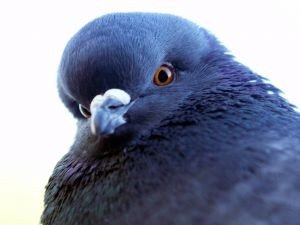
While songbirds fed in backyard feeders do not seem at risk, my favorite boyhood bird does seem to be in trouble. One of the Indonesian deaths was due to a fellow cleaning pigeon feces out of a gutter. And this story of a pigeon game stopped shows the extent that the bird flu has affected raising pigeons. I'm wondering what will happen to all the pigeon racers here if migratory birds bring the bird flu this way.
Of course, Indonesia just goes about business as usual:
http://news.yahoo.com/s/ap/20060520/ap_on_he_me/bird_flu_ignored_warnings
And is isn't that there wasn't other warnings:
http://discuss.agonist.org/smf/?board=6%3baction=display%3bthreadid=20552
Other pigeon notes, some of them reassuring:
http://www.abc.net.au/news/newsitems/200510/s1487872.htm
http://www.msnbc.msn.com/id/12466226/
http://www.purebredpigeon.com/avianflu.htm
http://www.healthcentral.com/newsdetail/408/1508144.html
Friday, May 26, 2006
Latest from Indonesia
http://abcnews.go.com/Health/wireStory?id=2003790
http://www.abc.net.au/news/newsitems/200605/s1648827.htm
http://abcnews.go.com/Health/AvianFlu/wireStory?id=1997826
http://www.nytimes.com/2006/05/24/world/asia/24birdflu.html
Well, no pandemic yet. Maybe we will be lucky and slip out of it with H5N1.
http://www.abc.net.au/news/newsitems/200605/s1648827.htm
http://abcnews.go.com/Health/AvianFlu/wireStory?id=1997826
http://www.nytimes.com/2006/05/24/world/asia/24birdflu.html
Well, no pandemic yet. Maybe we will be lucky and slip out of it with H5N1.
Thursday, May 25, 2006
Analysis of the Indonesian cluster
Scary week. But it was good to see the flu covered by the New York Times and National Public Radio. Somehow they managed to fit this topic in between corruption and incompetency of government action (Iraq, stolen Veteran's SSN, corruption in Congress, increasing debt, gas problems)
As far as I can tell while the cluster in Indonesia is a scary one ( the virus moved from bird to person, then to another person and then AGAIN to yet another person) it does not signal the beginning pandemic. There was no change in the nature of the hook the virus uses to infect and so it will not move efficiently from person to person. That explains why, even though the stupid Indonesians actually sent the infected people back out into the larger community for a while (until they got sicker and returned to the hospital to die) no spread seemed to be occuring in Indonesia.
It all does point out how unprepared some of these countries are. This is not the first such cluster in Indonesia. This virus has been hanging around for a couple years now and every so often there is a scare there because a cluster developes. Folks figured that Vietnam would be the most likely source of pandemic, but that country has gotten their ducks in line (so to speak) and pretty much pushed the damn bug out of the poultry population.
But Indonesia is another story.
Also worrying was that our government sent a huge shipment of Tamiflu to some "unnamed" Asian country this week. I hate it when we have to make everything a secret. It was an odd move because supposedly we are trying to stockpile Tamiflu here and definitely do not have enough for a real pandemic if it happened this week. So why send it abroad? One logical conclusion is that some American leaders thought this was going to happen this week in Indonesia. I wish they'd tell us a little more intelligent information about these things instead of that paternalizing, simplistic little speech that Leavitt gives, suggesting that everyone weekly put a can of tuna fish and a box of powdered milk under his bed. His idea of self reliance. His positioning post Katrina in order to establish that the Federal government can be of no help in pandemic emergency. It is the pre FDR theory of governemnt, every person for themselves.
Blue, red, conservative, liberal aside. The most frustrating thing in modern politics is that we are treated more and more like children than citizens. Of course, the real question is why we consistently like to put stupid people in office. If anyone looks smart in the race, the average American bristles and votes the other way.
As far as I can tell while the cluster in Indonesia is a scary one ( the virus moved from bird to person, then to another person and then AGAIN to yet another person) it does not signal the beginning pandemic. There was no change in the nature of the hook the virus uses to infect and so it will not move efficiently from person to person. That explains why, even though the stupid Indonesians actually sent the infected people back out into the larger community for a while (until they got sicker and returned to the hospital to die) no spread seemed to be occuring in Indonesia.
It all does point out how unprepared some of these countries are. This is not the first such cluster in Indonesia. This virus has been hanging around for a couple years now and every so often there is a scare there because a cluster developes. Folks figured that Vietnam would be the most likely source of pandemic, but that country has gotten their ducks in line (so to speak) and pretty much pushed the damn bug out of the poultry population.
But Indonesia is another story.
Also worrying was that our government sent a huge shipment of Tamiflu to some "unnamed" Asian country this week. I hate it when we have to make everything a secret. It was an odd move because supposedly we are trying to stockpile Tamiflu here and definitely do not have enough for a real pandemic if it happened this week. So why send it abroad? One logical conclusion is that some American leaders thought this was going to happen this week in Indonesia. I wish they'd tell us a little more intelligent information about these things instead of that paternalizing, simplistic little speech that Leavitt gives, suggesting that everyone weekly put a can of tuna fish and a box of powdered milk under his bed. His idea of self reliance. His positioning post Katrina in order to establish that the Federal government can be of no help in pandemic emergency. It is the pre FDR theory of governemnt, every person for themselves.
Blue, red, conservative, liberal aside. The most frustrating thing in modern politics is that we are treated more and more like children than citizens. Of course, the real question is why we consistently like to put stupid people in office. If anyone looks smart in the race, the average American bristles and votes the other way.
Subscribe to:
Posts (Atom)
